One workflow for every meeting.
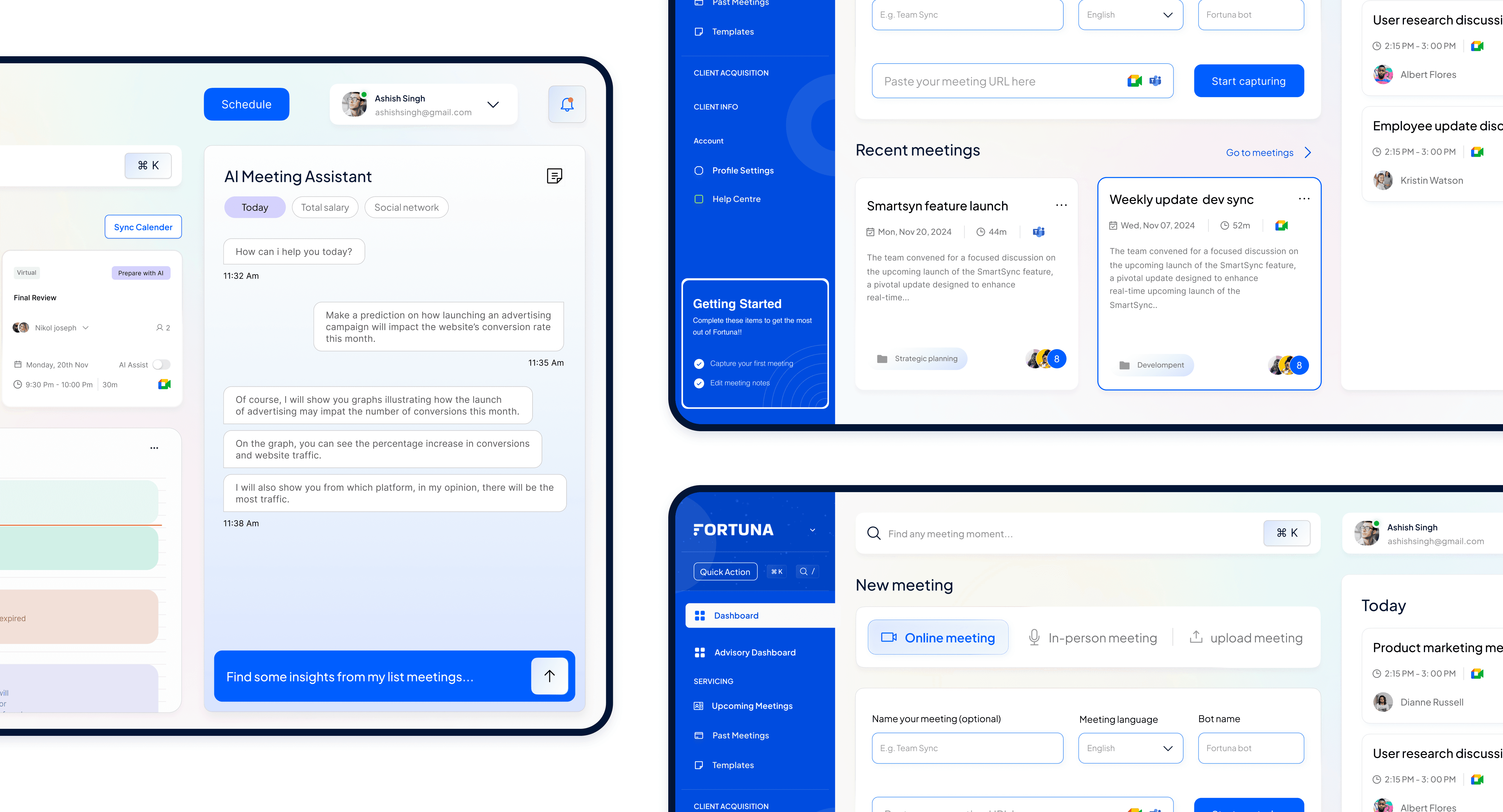
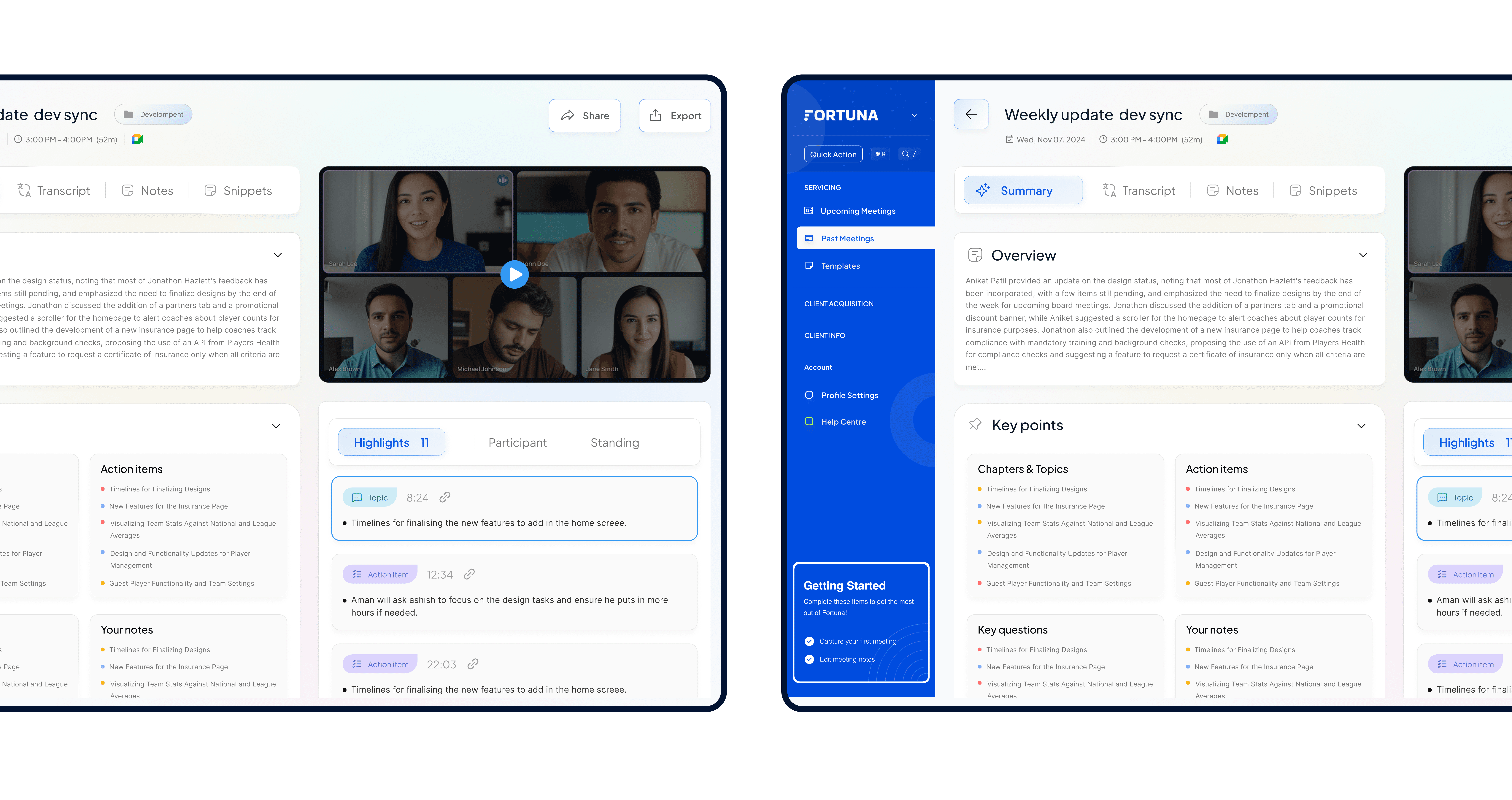
Fortuna goes beyond scheduling. It helps professionals remember what was said, prepare in minutes and walk in ready.
Meeting context lives in scattered notes, so people walk in underprepared.
Scheduling, AI summaries and quick prep, united in one calm workflow.
120K+ users in six months, with 70% using AI prep by month two.
Leading the design vision.
From first principles to final screens, I owned the direction and kept the team aligned.
I worked side by side with Product and Engineering, mentored two junior designers, and aligned stakeholders so every decision stayed tied to real user needs.
Meetings go wrong before they start.
We interviewed 20 professionals across tech, consulting and startups to see how they prepare.
Prep eats time
People spend up to 30% of their time getting ready, often trying to recall the last discussion.
Notes are scattered
Email, chat and docs each hold a piece, so action items slip through.
Scheduling isn’t enough
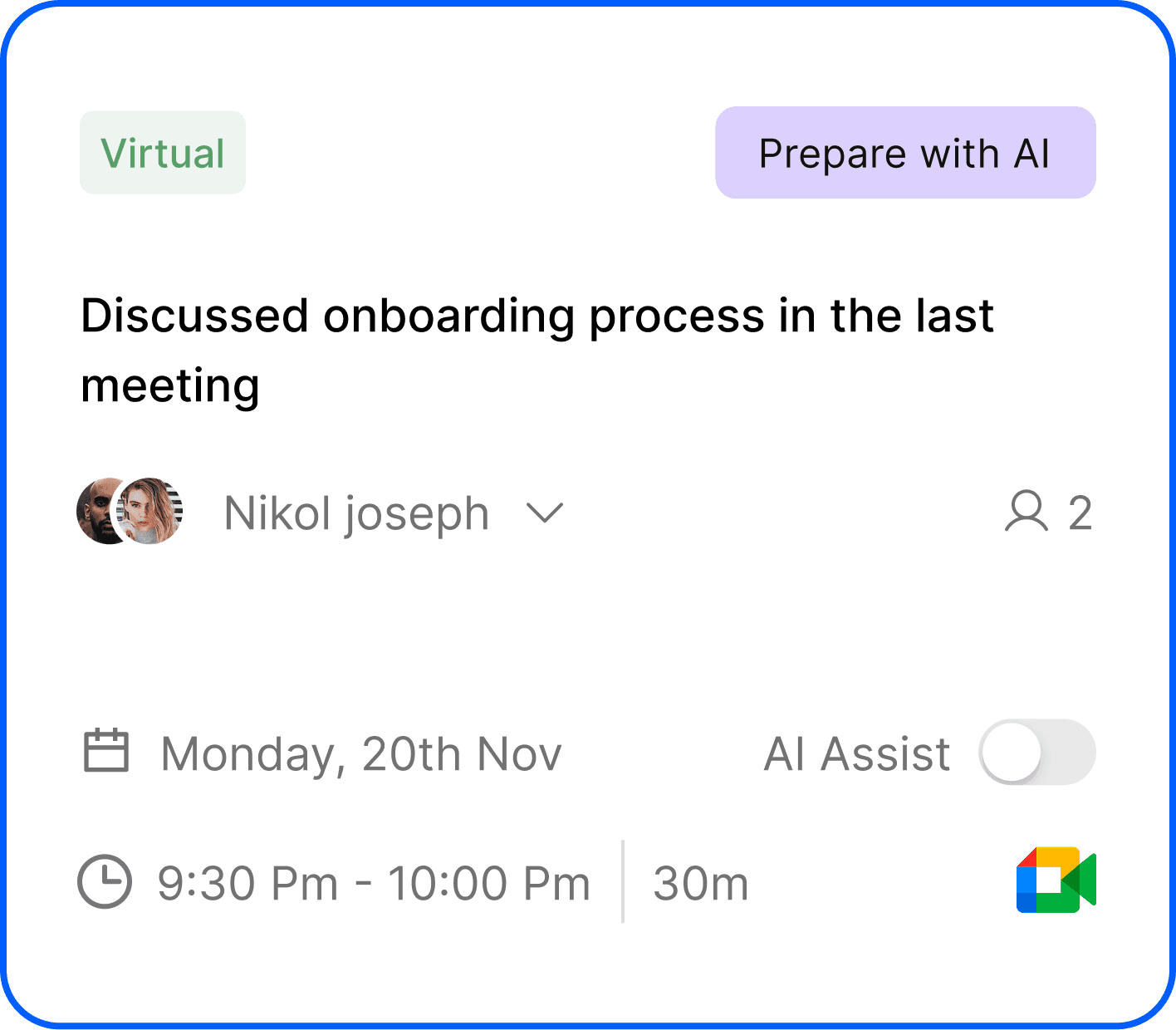
Users want past meetings summarised, plus AI-guided prep tips.
Context builds confidence
The right information, just before a meeting, sharpens decisions.
of professionals missed at least one key point from their previous meeting.
of professionals felt underprepared before joining an important meeting.
of professionals relied on scattered notes across email, chat or docs.
of professionals spent more than 15 minutes preparing for each meeting.
Five whys to the real problem.
I kept asking “why?” until the core motivation came into focus.
- Why does someone need a meeting tool?They forget key points and struggle to stay organised.
- Why do they struggle to stay organised?Past notes are scattered across email, chat and docs.
- Why are notes scattered?Existing platforms focus on scheduling, not preparation or context.
- Why does that matter?It wastes time and makes meetings stressful and unproductive.
- Why is it worth solving?Professionals need clarity, context and confidence to make every meeting count.
From problem to design question.
With the need clear, I used “How might we” to reframe the meeting experience.
How might we make meetings feel organised, insightful and stress-free?
Smart scheduling
Every meeting, in one place.
AI summaries
Key points and decisions, surfaced.
Quick prep
Context, right before you join.
Predictive insights
Anticipate outcomes before they happen.
Together, these turn meetings from time-consuming obligations into clear, productive sessions people feel ready for.
Three targets defined success.
We agreed on three north-star outcomes before design began, so every decision had something to be measured against.
Users feel ready in minutes, not hours.
users within six months of launch.
of users run AI prep before meetings, consistently, by month two.
Fortuna, in motion.
After rounds of feedback, a clean dashboard, AI summaries, quick prep and smart notifications come together in one calm workspace.
Smarter meetings. Faster decisions.
The launch moved every target we set, and users noticed the difference.
users joined within the first six months.
of users used AI prep consistently by month two.
month-on-month growth in meetings managed on the platform.
- Fewer missed action items and clearer discussions, as reported by users.
- Higher confidence before meetings, with feedback praising a smooth, efficient flow.
What I’d carry forward.
Three lessons from six months of building Fortuna.
What I learned
Simplicity and clarity matter most in scheduling tools. Users valued quick access to meetings and clear summaries over complex features.
What I’d do differently
I’d run usability tests earlier in the prototype phase, to catch navigation pain points before scaling the designs.
Key takeaway
Productivity tools win when they remove friction, so people can focus on collaborating instead of managing logistics.